

The missing link in the energy transition
Solar panels have been a huge success. They are appearing on more and more roofs, and on sunny days the Netherlands sometimes generates more green electricity than the grid can handle. Yet this success has also become a problem. This is because the electricity grid is designed not only for how much electricity is available, but also for how stable that electricity is.
Traditional power stations run on heavy, rotating turbines. That mass acts as a sort of flywheel: if there is a sudden drop in demand or supply, the grid continues to ‘run along’ for a while, giving it time to recover. We call this ‘inertia’ in the system.
Solar panels lack this feature entirely. They generate electricity via electronics, with no moving parts, and that electricity can be lost within seconds — for example, when a cloud passes overhead. Without a mechanical buffer, the grid becomes more susceptible to fluctuations and can become unstable more quickly during peaks and troughs.
The solution lies in energy storage: technologies that can capture surplus electricity at lightning speed and release it again at the right moment. There is no single silver bullet — each method has its own strengths, ranging from stabilisation in a matter of seconds to buffering over several days. Below is an overview of the key developments, and what you can already do with them yourself.
Pumped-storage hydroelectricity: the classic option
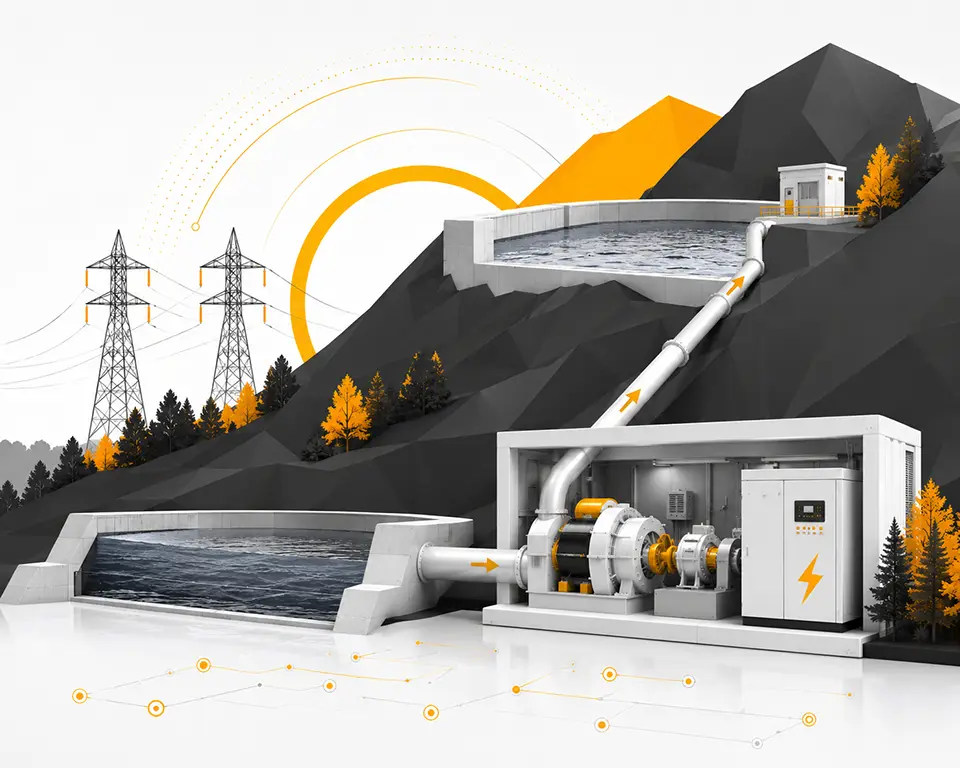
Worldwide, the majority of all large-scale energy storage still relies on pumped-storage hydroelectricity: water is pumped uphill when there is a surplus and allowed to flow back down when there is demand. Simple and reliable, but dependent on differences in elevation — and the Netherlands has hardly any of those. That is why attention here is turning to an underground variant: an artificial lake at the surface, linked to a reservoir at a depth of around 1,400 metres in South Limburg. Research indicates that such a project could be economically viable, although construction is costly and technically complex.
Gravity in new forms
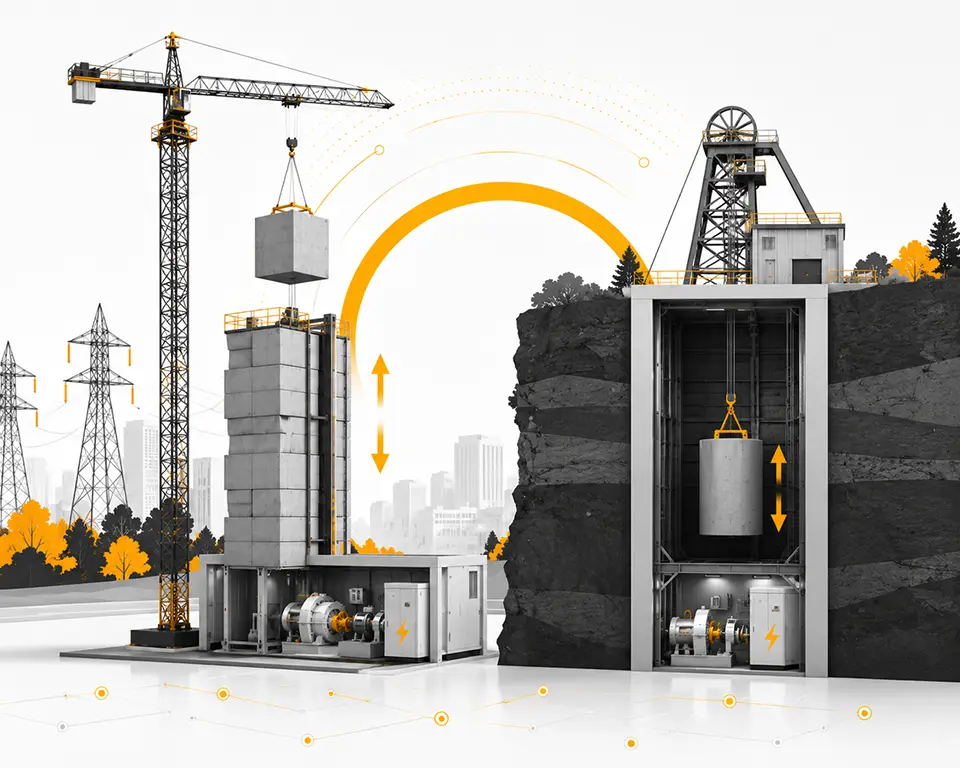
Where there are no mountains or reservoirs available, gravity is utilised in other ways. In tower storage, a crane hoists heavy concrete blocks upwards and lowers them again; the energy released drives a generator. Another variant involves suspending a heavy weight in an old mine shaft — a technique that holds particular promise in Limburg, as there are already disused mine shafts that can be used for this purpose. Neither system requires a specific geographical location, but both do require space and the appropriate permits.
Liquid air as a battery
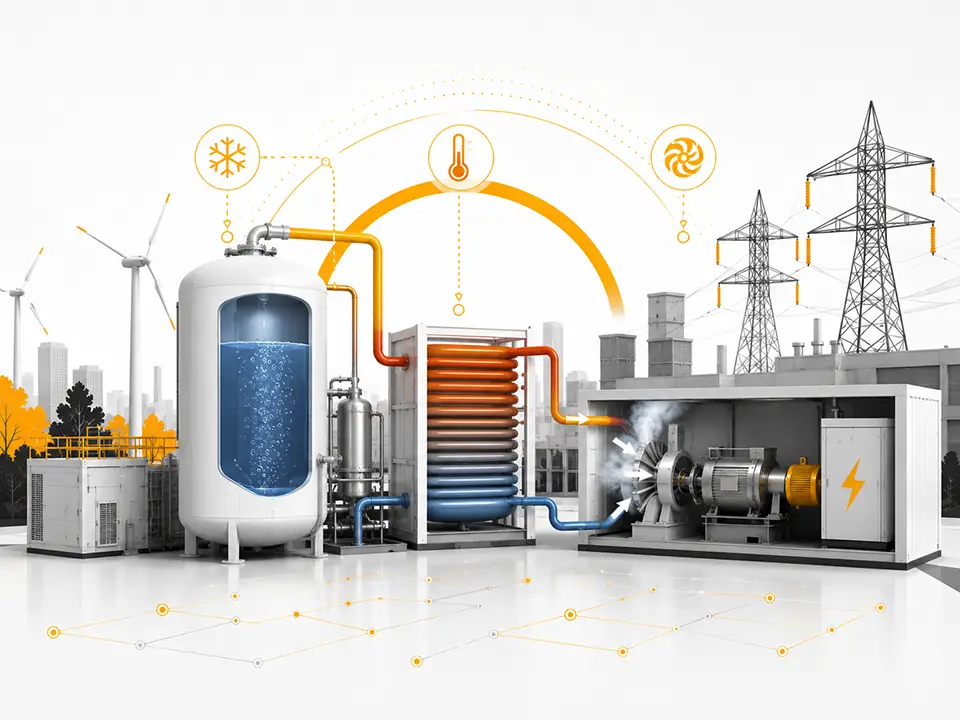
A lesser-known but promising technique is liquid air energy storage, also known from the British CRYOBattery project. In this process, air is cooled to minus 196 degrees Celsius, causing it to become liquid and shrink significantly in volume. The heat released during this process is stored separately. When electricity is needed, the liquid air is allowed to evaporate again using that stored heat. The air expands enormously, thereby driving a turbine. The major advantage is that this technology can be built almost anywhere, without the need for specific geological conditions or elevation differences — industrial sites are sufficient.
Compressed air and hydrogen in the ground
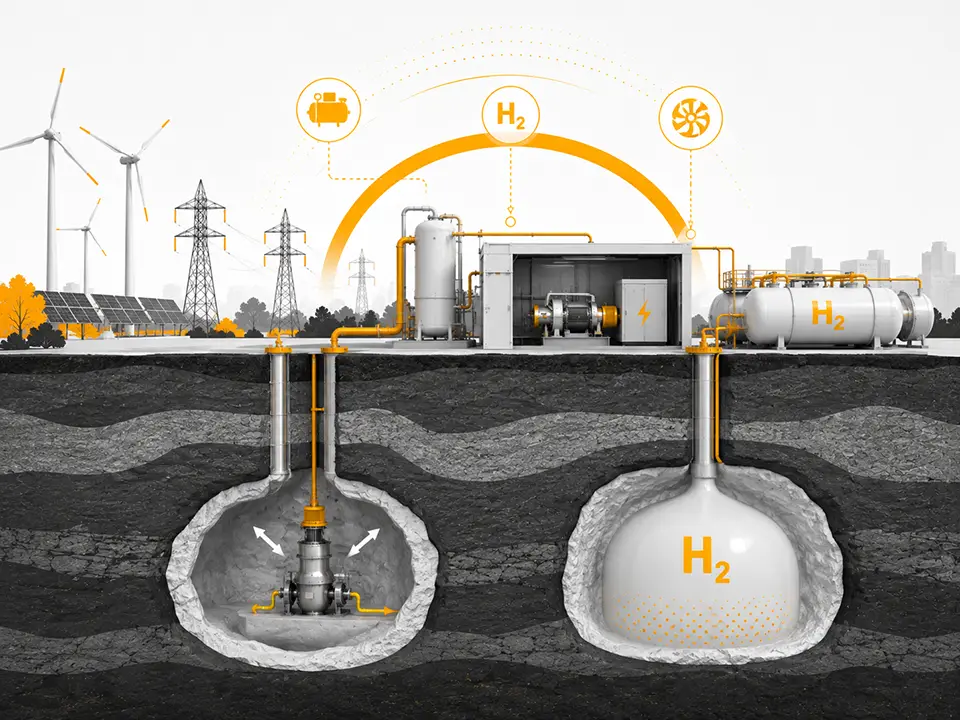
Compressed air can also serve as a storage medium: surplus electricity is used to compress air into an underground salt cavern, which is later released to drive a turbine. Those same salt deposits — such as those found in Groningen and Twente — are also suitable for large-scale hydrogen storage. For the Netherlands, this is a promising route, precisely because the necessary geological conditions are already in place.
Fast stabilisers: flywheels and batteries
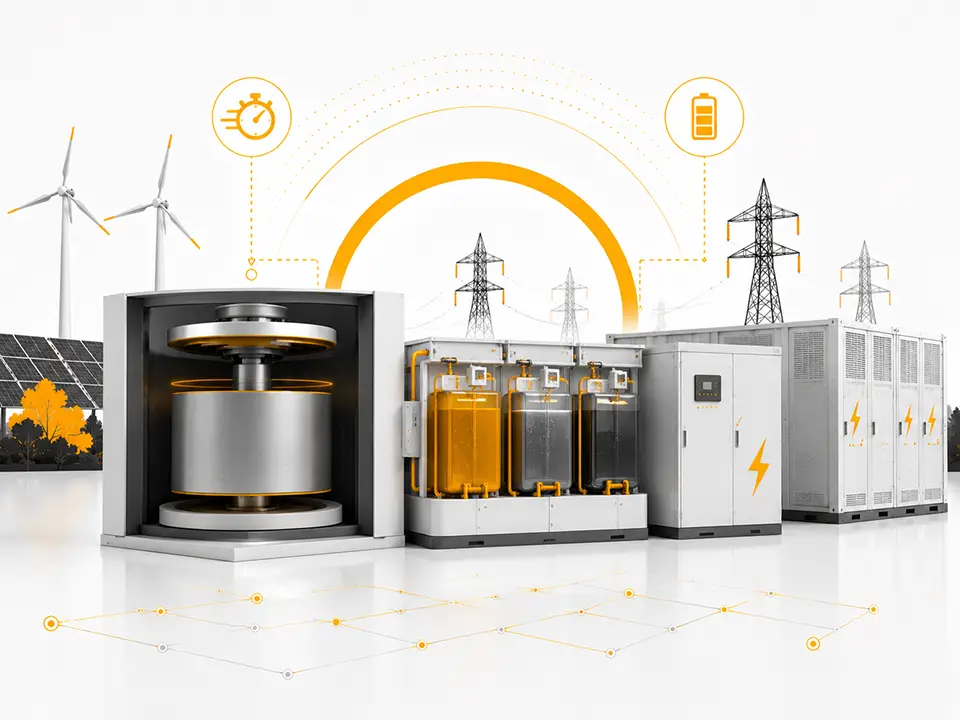
For the very fastest fluctuations — seconds, not hours — flywheels and large-scale battery systems are indispensable. Flywheels store energy in a rotating mass and can release it again in the blink of an eye, making them ideal for stabilising the grid. Redox-flow batteries do something similar, but chemically, and can be scaled up modularly without geographical constraints.
Heat and water as storage media
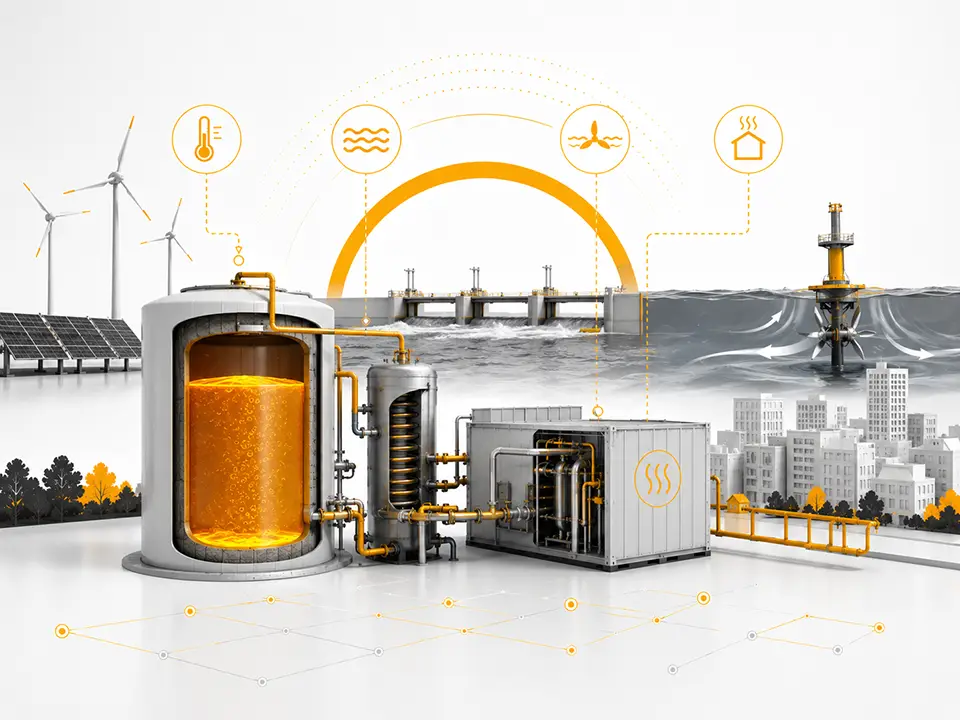
Not all storage needs to be in electrical form. Molten salt systems store heat rather than electricity, and that heat can be used directly for district heating. Wave and tidal energy also play a role here, although the potential in the Netherlands is more limited than in countries with a rougher coastline: the North Sea has relatively small waves, but pilot projects involving tidal turbines are already underway at passages in the Wadden Sea and at the Oosterschelde barrier.
What can you do right now?
All these large-scale projects take years to develop. The good news is that you don’t have to wait for them. With a home battery, you can get involved in the same movement today — on a small scale, but with an immediate impact on your wallet and on the strain on the grid.
A home battery stores the electricity your solar panels generate during the day, rather than feeding it back into the grid at a low price. In the evening, when the sun has gone down and demand peaks, you use that stored energy yourself. With a dynamic energy contract, you can go one step further: charge your battery when the electricity price is low — often precisely when there is a surplus of solar or wind power — and use that electricity at times when the price is high.
In this way, without having to wait for billions to be invested in new infrastructure, you can already play an active role in creating a more stable and greener electricity grid. Smart charging and discharging isn’t just good for your energy bill; it also alleviates the very problem this article began with — a grid that is finding it increasingly difficult to cope with fluctuations.
The major breakthroughs in energy storage are still ahead of us. But you can take the first step towards a more stable grid yourself, right now.