

When comparing solar panels or solar roof tiles, people often look at peak wattage and price. But it is what lies beneath – the solar cell – that determines how much of the sunlight is ultimately converted into electricity. Two technologies are currently gaining prominence: TOPCon and IBC. What are they, and how do they differ?
What is a solar cell?
A solar cell is a thin slice of silicon that converts sunlight into electricity. It has metal contacts on it that carry away the generated current. The way in which the cell is constructed and the position of those contacts determine how efficient the cell is. For many years, PERC was the standard. TOPCon and IBC are the next step.
TOPCon: an improved standard
TOPCon stands for Tunnel Oxide Passivated Contact. The cell contains an ultra-thin oxide layer, just a few nanometres thick, with a layer of doped silicon on top. This layer acts as a smart gate: the generated electrons can ‘tunnel’ through it to the contact, whilst the lossy reverse current is blocked.
As a result, less energy is lost at the cell’s surface. This results in a higher efficiency than PERC. TOPCon was developed as a further refinement of existing production lines and is therefore relatively easy to manufacture on a large scale. This explains why it is now used in many modern solar panels.
Key features of TOPCon at a glance:
- the contacts are located on the front and back of the cell
- high efficiency, around 25% for commercial cells
- relatively low production costs
- good performance at higher temperatures and in diffuse light
IBC: alle contacten aan de achterkant
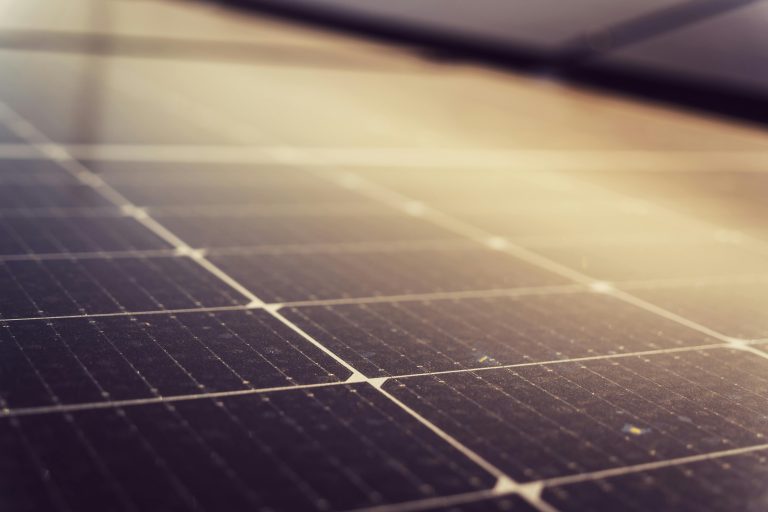
IBC stands for Interdigitated Back Contact. What makes it special is that all the metal contacts – both positive and negative – are located on the back of the cell. As a result, the front is completely free of lines and contacts.
This has two advantages. More light falls on the active surface, as nothing blocks the sunlight. And the front is completely flat, giving it a cleaner, sleeker appearance. The disadvantage is that production is more complex, as the contacts on the back must be aligned with great precision. This generally makes IBC cells more expensive to manufacture.
Key features of IBC at a glance:
- all contacts on the back
- no visible lines on the front
- cell efficiencies that are amongst the highest commercially available, at around 25% to 27%
- a more complex and expensive manufacturing process
What does this mean for you as a homeowner?
For most homeowners, the difference between a good TOPCon cell and an IBC cell is, in practice, minimal. Both technologies represent a significant step forward compared with older panels. What you should look out for, however, is:
- Available roof space: if your roof is small, a cell with a higher efficiency is worth considering, as you’ll get more electricity from the same surface area.
- Appearance: an IBC cell has a smooth front surface with no visible lines. This is appealing if you want your solar panels to look visually unobtrusive.
- Price: TOPCon is generally more cost-effective, which is a factor in the payback period.
Incidentally, the cell’s efficiency isn’t the whole story. The quality of the entire panel or solar roof tile, the installation and your own energy consumption ultimately determine how much you save.
Frequently asked questions about Cell types
What is the difference between TOPCon and IBC?
In TOPCon cells, the contacts are located on the front and back of the cell, and an ultra-thin oxide layer ensures lower losses. In IBC cells, all the contacts are located on the back, leaving the front completely free.
Is IBC better than TOPCon?
IBC often achieves a slightly higher cell efficiency and has a smoother front surface, but is generally more expensive. TOPCon offers a good balance between performance and price. Which is ‘better’ depends on what matters most to you.
Is TOPCon better than PERC?
Yes, TOPCon achieves a higher average efficiency than PERC and loses less energy within the cell.
Do IBC solar panels look any different?
Yes. Because the contacts are on the back, there are no lines visible on the front, which gives it a clean, minimalist look.
Why Solinso has chosen TOPCon
The best choice for the vast majority of customers
Solinso uses TOPCon cells. Due to the end of the net metering scheme and the higher efficiency of modern cells, roofs are now rarely covered entirely with panels. There is often more than enough roof space, meaning you do not even reach a roof’s maximum peak wattage. As a result, a good payback period becomes a more important consideration than the very highest efficiency per cell.
In most situations, the slight increase in yield offered by IBC does not outweigh the higher costs. We can therefore best serve most homeowners with TOPCon. Would you still prefer IBC, for example because of its smooth front surface with no visible lines? Please get in touch with us, and we’ll explore the options together.
The figures are indicative and vary by manufacturer and year of manufacture. Use them to compare technologies, not as fixed values.