

How AI is paving the way for the solar cells of tomorrow
Somewhere within the vast array of possible material combinations lies the solar cell of the future. The challenge lies in finding it. Perovskite has the potential to make solar cells more efficient than ever before, but still faces a number of crucial hurdles. HELIOS is the project that aims to overcome these hurdles — using artificial intelligence as a powerful tool.
Perovskite — and the problem
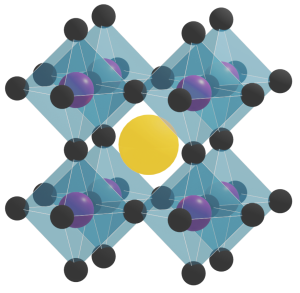
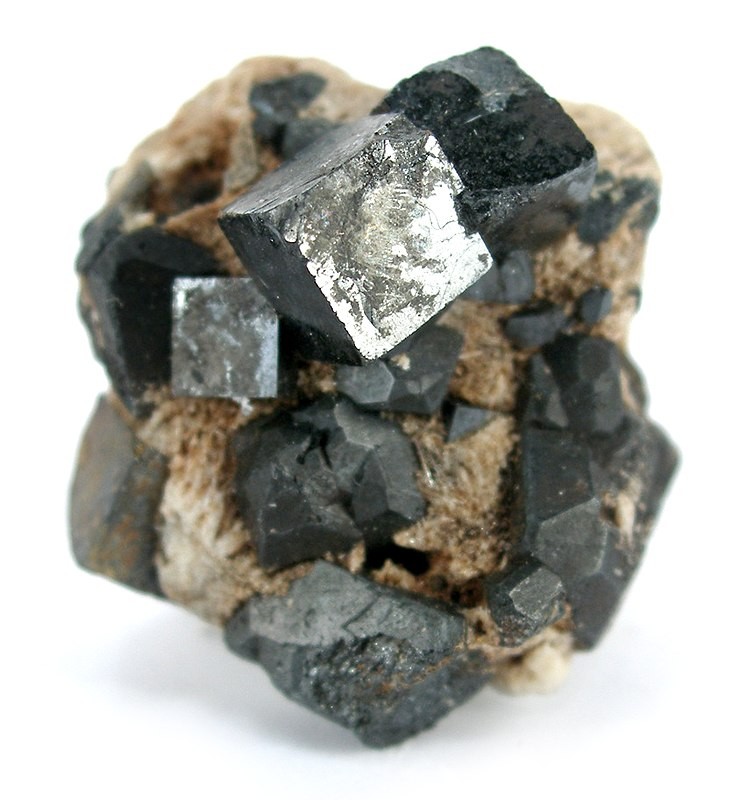
Silicon has been the dominant material in solar panels for decades, but it has theoretical limits. Perovskite is a crystalline material structure that has attracted a great deal of attention in the world of solar energy in recent years. It is a material that can theoretically achieve higher efficiency than silicon — and thus fundamentally transform the solar energy sector. The technology is promising, but still faces a crucial challenge: the stability of perovskite. Under the influence of light, moisture and heat, perovskite solar cells currently degrade too quickly for large-scale application. Until that problem is solved, the technology will remain confined to the laboratory.
HELIOS and Peter Bosman:a project with a mission
This is where HELIOS comes in. HELIOS is a collaborative project entirely dedicated to solving precisely this problem — with AI as its central research tool. Leading the AI component is Peter Bosman, group leader of Evolutionary Intelligence at the CWI (Centre for Mathematics and Computer Science) and part-time professor at Delft University of Technology. Bosman is no stranger to AI-driven research with practical applications: he has previously designed and applied forms of AI in medical projects. Now he is directing that expertise towards one of the most pressing technological challenges of our time.
HELIOS brings together three leading organisations: CWI provides the AI expertise, whilst DIFFER in Eindhoven (Dutch Institute for Fundamental Energy Research) and AMOLF in Amsterdam contribute their expertise in materials and cells. The project focuses on two key areas: identifying the right material structures and optimising the various perovskite layers. Each layer is tailored to a specific part of the light spectrum, so that together as much sunlight as possible is converted into energy.
First of all: what exactly is AI?
It’s worth taking a moment to consider what AI actually is — and what it isn’t.
Artificial intelligence has existed as a concept for decades, but it is only in the last fifteen to twenty years that the computing power has become available to truly bring it to life. The key to this lies in GPUs: graphics processing units originally developed for gaming, but which, thanks to their ability to perform vast quantities of calculations in parallel, proved to be the ideal engine for AI systems. Without that computing power, modern AI as we know it today would not exist.
But is AI really intelligent? The answer depends on how you define intelligence. An AI tasked with performing a calculation can produce a curve that is practically identical to a quadratic function — without knowing that such a function exists. The system has found a very good approximation through pattern recognition, but does not understand what it has found. That is precisely the difference between a powerful tool and true reasoning.
Neural networks
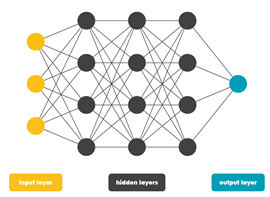
So how exactly does AI do that? The answer lies in neural networks — systems inspired by the human brain. A neural network consists of layers of interconnected nodes, each of which processes and passes on a small piece of information. By processing vast amounts of data, the network learns for itself which connections should be strong or weak — without anyone explicitly programming it to do so. The result is a system that discovers patterns in vast, complex datasets — much faster than a researcher could ever manage. But that layered complexity has a downside: even the creators often cannot say exactly which steps the network took to reach a conclusion.
Black box AI vs. XAI
This distinction becomes even clearer when considering the difference between black box AI and Explainable AI (XAI). With black box systems, it is unclear what internal steps the system takes to reach a conclusion — it works, but nobody knows exactly why. XAI, on the other hand, makes those intermediate steps transparent. For scientific research, this is a key issue: you don’t just want a result; you also want to understand why that result is correct. XAI is not currently being used within HELIOS, but it is a development that may become relevant at a later stage as the research progresses, as it can provide insight into why certain designs are currently working so well.
AI within HELIOS: smarter searching, faster learning
Traditional research follows a slow and costly process: formulating a hypothesis, conducting an experiment, analysing the results, and starting over. Every possible combination of materials must be tested — including those that ultimately do not work.
In perovskite research, this can take years – the number of possible structures and compositions of layers is simply too vast to be explored using conventional methods.
AI fundamentally changes that process. Within HELIOS, the AI uses available data to predict which direction offers the best prospects for the next step. As a result, researchers no longer need to work through every possible combination — inefficient steps are skipped. Every result from every experiment is fed back into the system, enabling the AI to continuously learn and refine its recommendations. It is an iterative process in which the researcher and the AI reinforce each other.
AI does not replace the researcher, Bosman emphasises. ‘It is a tool that makes research much more efficient and can accelerate it by leaps and bounds. The scientist remains in the driving seat; AI helps to steer the right course.’
The road to market
HELIOS is working step by step towards a concrete end result. The aim is to use AI to identify a promising perovskite structure with high stability, to build and test it as a functioning cell in the laboratory, to then validate it in practice under realistic conditions, and ultimately to develop a method for large-scale production.
Bosman is realistic: it will certainly take another five to ten years before any market realisation becomes a possibility. The research is still in its infancy to have any immediate impact on the market. But every step taken brings that future closer.
Europe and the Netherlands: more than just science
HELIOS’s scope extends beyond science alone. If perovskite technology can be developed in Europe and perovskite solar calls can be produced here on a large scale, Europe will be well-positioned in a market that is growing exponentially worldwide. This would be particularly valuable for the Netherlands: good for the economy, good for our knowledge base, good for the manufacturing sector and good for exports. The best-case scenario? That the production of these perovskite solar cellso eventually takes place in the Netherlands too — a boost for industry, knowledge and international competitiveness all at once.
A future that starts in the lab
HELIOS is not a project that promises to change the world overnight. It is a meticulous, ambitious and collaborative research initiative that is working step by step towards a breakthrough that is well worth waiting for. With Peter Bosman and his partners at work, using AI as a tool in this field, and with perovskite as a material that has only partially demonstrated its potential — HELIOS is one of the most promising research projects in the Dutch solar energy sector.
AI has already transformed the world of scientific research. HELIOS will demonstrate what that transformation might look like in practice, in the field of solar energy.